




AC38 Event Limited — 37, Vero Centre, 48 Shortland Street, Auckland, 1010, New Zealand
America’s Cup Preliminary Regatta in Naples
The America's Cup Preliminary Regatta is the second of the warm-up events before the Cup itself arrives in Naples in 2027. It is free and it will close half of Chiaia to traffic for the weekend.
Daily hours
Thu 24 Sep Race village: 11:00 – 21:00 • On the water: official practice day, from 14:00
Fri 25 Sep Race village: 11:00 – 21:00 • On the water: up to three fleet races, from 14:00
Sat 26 Sep Race village: 11:00 – 20:30 • On the water: up to three fleet races, from 14:00
Sun 27 Sep Race village: 11:00 – 22:00 • On the water: up to two fleet races, then the match race final
Racing depends on the wind. Starts get delayed and races get abandoned, so treat 14:00 as the earliest rather than the appointment, and check the official feed on the day.
What is actually happening
Six teams race identical AC40 boats, four sailors to a crew, in the water between Castel dell'Ovo and Posillipo. Thursday 24 is an official practice day. Friday and Saturday each have up to three fleet races, Sunday up to two, and the weekend ends with a match race between the two boats at the top of the table. Racing starts at 14:00 each day.
The line-up is Emirates Team New Zealand as defender, GB1 as Challenger of Record, Luna Rossa Prada Pirelli, Tudor Team Alinghi, La Roche-Posay Racing Team and American Racing. The boats are fast enough to make the racing legible from shore, which is not true of every sailing event.
Where to watch
The organisers have built a Race Village on Lungomare Caracciolo, between Rotonda Diaz and viale Dohrn, taking in Mappatella beach. It has a main stage at the Rotonda, large screens with live commentary, the dock-out and dock-in shows where the crews leave and return, a food court, and the official merchandise shop. Entry is free.
The village is where the atmosphere is. It is not necessarily where the sailing is. The course runs west of it, so if you want to watch the boats rather than the screens, walk toward Mergellina or up onto Posillipo and find a wall to lean on. The terraces above Marechiaro and the viewpoints along via Petrarca look straight down the course. Bring binoculars if you own any.
If you have access to a boat, the organisers run a registration for spectator craft, with a course area and exclusion zones you are expected to respect. Sign up through the event site rather than turning up and improvising.
Getting there, and the closures
This is the part worth planning around. Via Francesco Caracciolo is closed to traffic entirely for the four days of racing, and viale Dohrn from 21 September. Riviera di Chiaia carries the displaced traffic in a modified arrangement, and the seafront cycle path is out of use from 7 September to 5 October. A wider traffic plan covers the whole month.
Do not drive. The metro to Amedeo or Mergellina, or the funicular down from Vomero, will be quicker than anything on wheels along the coast, and the walk from either into the village is pleasant. If you are staying in the centro storico, the walk down through Chiaia takes about half an hour and is one of the better ways to arrive.
Expect the lungomare to be busy in a way it usually is not, and expect the restaurants along via Partenope to be booked. If you want lunch near the racing on the Saturday, book it now.
What this is a rehearsal for
The Cup proper comes to Naples in 2027, and this September is the city finding out what that will involve: a month of altered traffic, a working race village on the seafront, and international crews training in the bay. For visitors it is a rare chance to see the format at close range without the crowds and prices a Cup summer will bring.
Curated by
Svevo
Founder & Chief Editor

Svevo is a Senior Digital Consultant and Full Stack Developer with over 20 years of experience. Born and raised in Italy, he spent more than a decade living and working in London before returning to Naples. A father of two and passionate advocate for his city, he created Ciao Napoli to share the places, stories and experiences that make Naples special from a genuinely local perspective. You can find out more about his work on his personal website.
Places in the Area
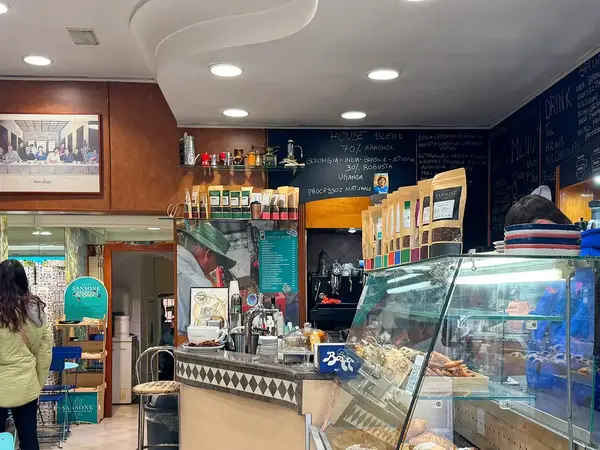
Caffè Sansone
A Naples micro-roastery where the classic espresso gets a quiet reinvention. Artisan blends, rotating single origins, and real passion for the craft.
 inside
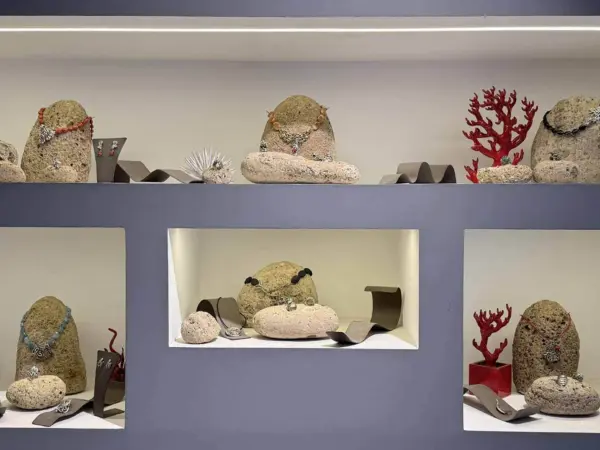
Pietrasalata (Valerio Pirolo)
Handcrafted silver jewellery by Neapolitan artisan Valerio Pirolo. Each piece is shaped in wax, oxidised with sulphur and drawn from the natural world of the Mediterranean.