



Castel Sant'Elmo – Naples' Star Fortress
A six-pointed fortress carved into the tuff at the top of the city, with seven centuries of kings, viceroys and prisoners behind its walls, a museum of 20th-century Neapolitan art inside, and a view from the ramparts that takes in all of Naples at once.
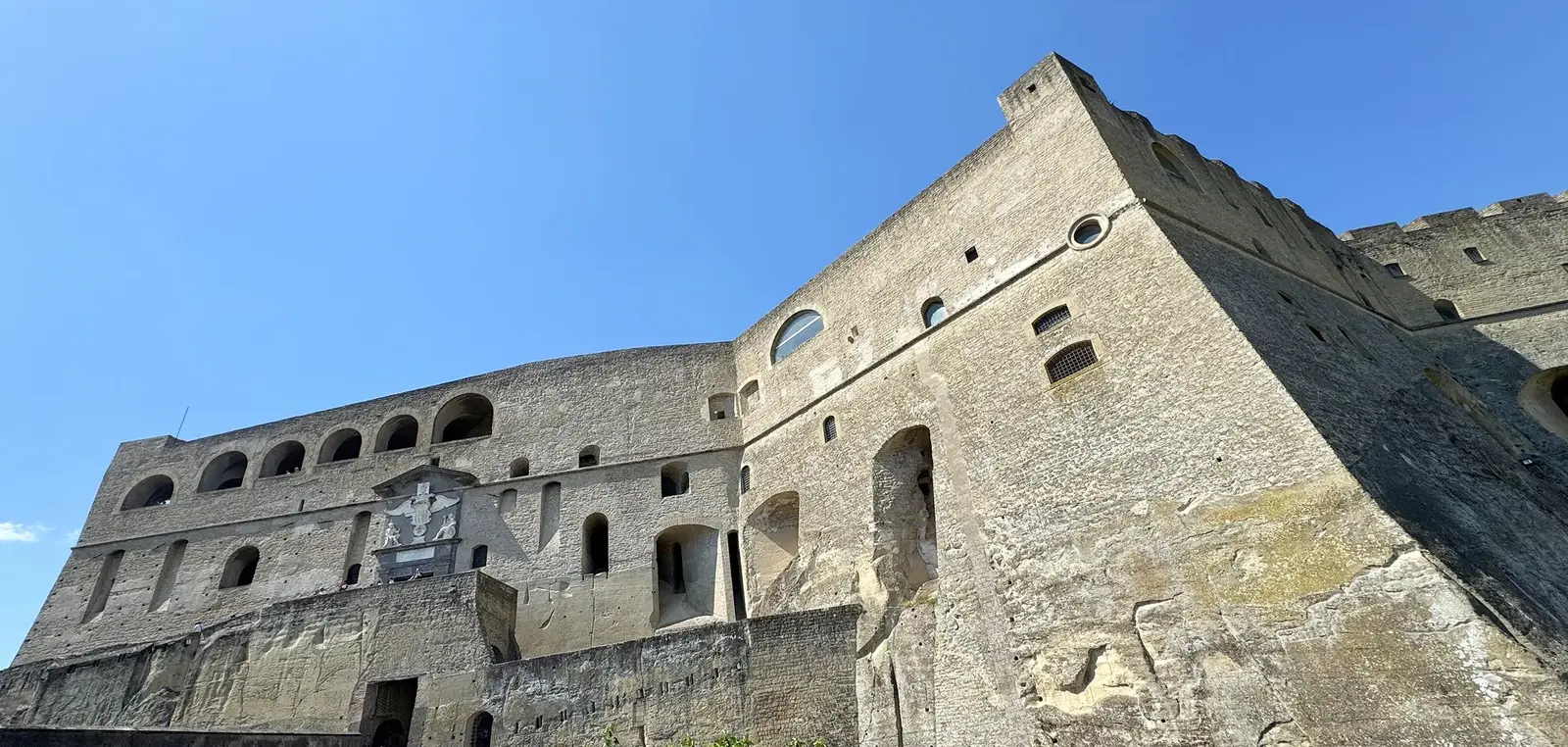
Look up from almost anywhere in Naples and you'll see it: a long, pale wall of tuff sitting on top of the hill, with the Certosa di San Martino tucked just below it. That's Castel Sant'Elmo, the fortress that has watched over the city for seven centuries from the top of Vomero. Most visitors come for the view, and fair enough, it's spectacular. But the castle itself has a story worth knowing before you climb onto its walls.
From royal residence to star fortress
The first records of a building up here date back to 1275, when the family of Charles of Anjou was living in it. Back then it was called Belforte: a fortified residence with a square plan, surrounding walls and two towers flanking the entrance, standing on what was then known as Monte Sant'Erasmo. The name stuck, in a way. A small chapel dedicated to Saint Erasmus had stood on the hill since the 10th century, and over time Erasmo became Ermo, then Elmo.
In 1329 Robert of Anjou handed the job of rebuilding it to Tino di Camaino, the Sienese sculptor and architect who was already at work on the Certosa next door. Then the 1456 earthquake left it close to ruin, and Alfonso II of Aragon called in Francesco di Giorgio Martini, the leading fortification expert of the day, to draw up a new plan.
The shape you see today came later. In 1537 the Spanish viceroy Don Pedro de Toledo had a grand idea: ring the city with a defensive system anchored by four castles. Sant'Elmo was redesigned by Pedro Luis Escrivà, a military architect from Valencia, as a six-pointed star. The works took ten years, and the military experts of the time weren't impressed by the daring hexagonal design. They were wrong. With its gun ports in the bastions, high walls and a deep moat all around, the fortress did exactly what it was built to do.
The entrance gateway is built in piperno, the dark grey volcanic stone you’ll see all over Naples. Above it sits the marble coat of arms of Emperor Charles V with the Habsburg double-headed eagle, carved in 1538 by Tommaso Boscoli, one of Michelangelo’s collaborators, alongside an inscription celebrating the emperor and his viceroy, Don Pedro de Toledo. Just beyond the small access bridge is the Grotta dell’Eremita, a hollow in the rock that, according to tradition, once sheltered a hermit.
A city within the walls
Sant'Elmo worked like an independent citadel. Its castellan held both civil and military authority, and the Piazza d'Armi at the top housed the officers' quarters, the chaplain, the armoury and a church. Underneath, carved along the perimeter, were two levels of huge vaulted rooms: food stores, munitions depots, wash houses, ovens, kitchens, barracks and two enormous cisterns.
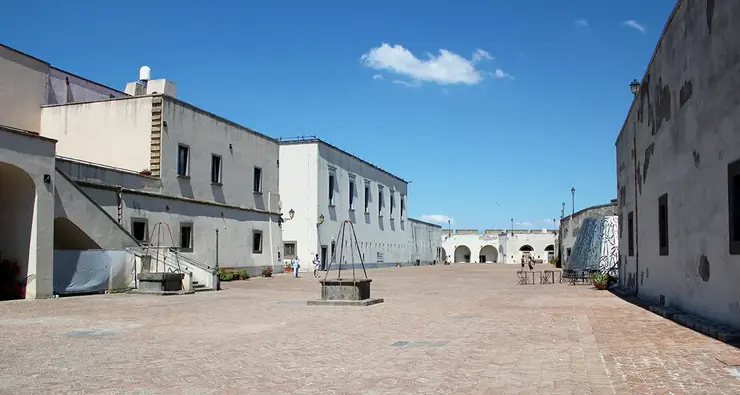
In 1587 a bolt of lightning struck the powder store. The explosion destroyed the church, the castellan's residence and the soldiers' quarters, and killed many people. Domenico Fontana, the Swiss-born architect of the Royal Palace, rebuilt them between 1599 and 1610, adding the access bridge and the new church of Sant'Erasmo. Inside the church, behind the high altar on the left, is the tomb of Don Pedro de Toledo, cousin of the viceroy and the fortress's first castellan, a fine work by the sculptor Annibale Caccavello.
A fortress that faced the city
Here's the uncomfortable truth: Sant'Elmo was used far more against Naples than to defend it. The Spanish relied on it to crush the riots that broke out when they tried to bring the Inquisition to the city, and in 1647, during Masaniello's revolt, the viceroy's troops fired its cannons on the neighbourhoods where the rebels were hiding.
It was also a prison for people the authorities found inconvenient. The philosopher Tommaso Campanella was held here in 1604. In 1799, after the fall of the short-lived Neapolitan Republic, its patriots were locked up inside, among them Gennaro Serra, Mario Pagano, Domenico Cirillo, Ettore Carafa and Luisa Sanfelice. From 1860 until 1952 it served as a military prison, and it stayed in the army's hands until 1976. A seven-year restoration followed, bringing back the original walkways, the patrol paths along the walls and the underground passages, where one of the old cisterns has become an auditorium.
The view, and the art
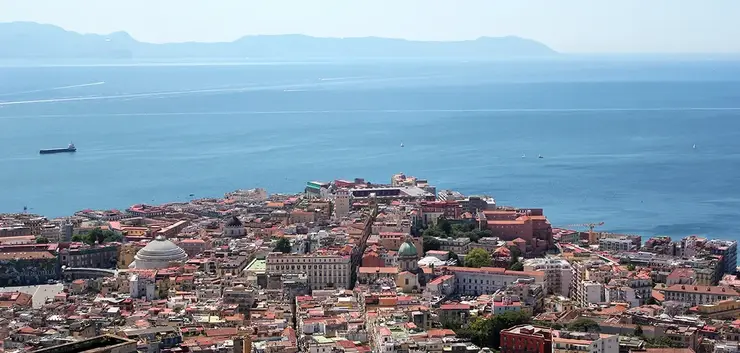
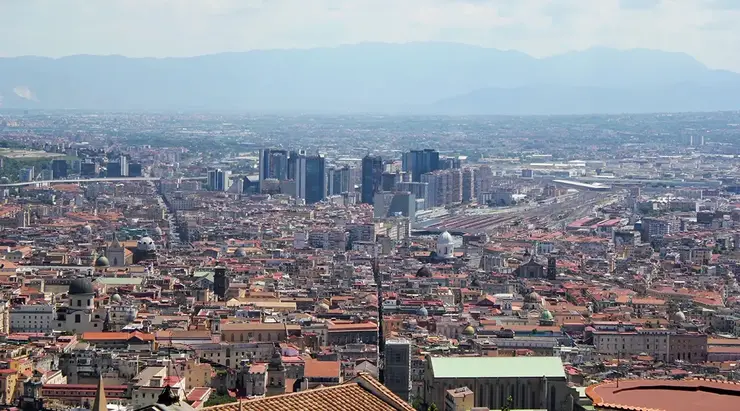
Now for the reason you climbed up here. Walk the ramparts and the whole city spreads out below you: the straight cut of Spaccanapoli through the historic centre, the domes, the port, Vesuvius across the bay, Capri and the Sorrento peninsula on a clear day, and the hills of Capodimonte behind. It's the kind of view that explains Naples' geography better than any map. Go late in the afternoon, when the light softens and the tuff turns golden.
The other view
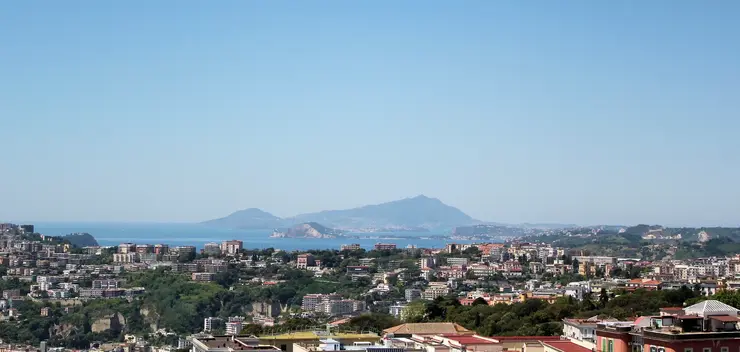
Most people stay on the side facing Vesuvius, but walk round to the western ramparts and you get a different Naples altogether. Look for the small Bourbon guard post in grey piperno, built to keep watch over this stretch of coast.
Below you are Fuorigrotta and the Campi Flegrei (Phlegraean Fields, from the Greek phlegraios, “burning”, a nod to the volcanic ground that still steams and shifts today), with the little island of Nisida just off the coast. Further out lies Procida, low and flat on the water, and behind it Ischia, with Monte Epomeo rising from the middle of the island. Ischia is volcanic too, by the way: around here, it’s hard to look anywhere without finding a volcano.
On a summer evening, with the sun going down over the Campi Flegrei, this side can be even more fascinating than the famous one. Just don't say that to a Neapolitan. It goes down about as well as telling them you prefer focaccia romana to Neapolitan pizza.
The Museo del Novecento
Before you leave, step into Novecento a Napoli. It opened in 2010 in the Carcere Alto, the old upper prison overlooking the Piazza d’Armi, and its curators like to call it a museum in progress. The collection tells the story of art in Naples between two precise dates. It starts in 1910, the year of the first Neapolitan Secession, when local artists began shaking off the weight of 19th-century tradition. It ends in 1980, the year of the Irpinia earthquake, which closed a whole chapter of the city’s cultural life.
In between, you can follow Neapolitan artists as they embraced Futurism, then the post-war groups that most visitors have never heard of (Gruppo Sud, Gruppo ‘58, Geometria e Ricerca), all the way to the Transavanguardia, the movement theorised by the critic Achille Bonito Oliva, with names like Mimmo Paladino and Francesco Clemente. Most visitors skip 20th-century Naples entirely, and the museum is a good reminder that the city’s creative life didn’t stop with the Baroque. It’s rarely crowded, which is part of its charm.
How to visit
Castel Sant'Elmo is at Via Tito Angelini 20/A, at the top of Vomero. The easiest way up is by funicular: the Montesanto line stops at Via Morghen, a short walk from the entrance, but it's now closed for maintenance until mid 2027. The Centrale (from Via Toledo) and Chiaia lines get you to the hill with a slightly longer stroll. If you'd rather earn the view, climb the Pedamentina, the 414-step stairway that runs from Corso Vittorio Emanuele up to the Certosa, just below the castle.
The castle is open from Wednesday to Monday, 8:30 to 19:30, and the Novecento museum from 9:30 to 18:30 (last entry 17:30). A full ticket costs €5 until 16:00 and €2.50 after, and a combined ticket with the Certosa di San Martino is €9. Like all state museums, entry is free on the first Sunday of the month. Allow an hour and a half to two hours to do it properly.
A Scaturchio pastry in the castle
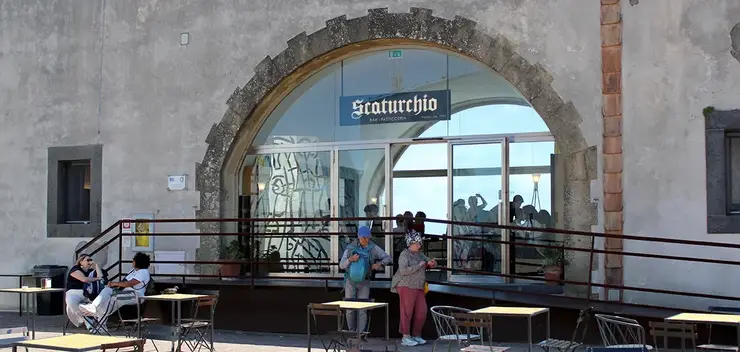
Inside the castle there's a branch of Scaturchio, one of the historic names of Neapolitan pastry, famous for its sfogliatelle, babà and the chocolate-and-rum ministeriale. It's a pleasant spot to sit after walking the walls. One thing to know, though: they don't serve coffee at the counter, so you'll need to take a table even for a quick espresso. In a city where coffee is drunk standing up in thirty seconds, we find that a bit of a shame. Still, with that view, sitting down isn't the worst punishment.
People often ask us
What legends surround Castel Sant’Elmo?
Like almost every castle and palazzo in Naples, Sant’Elmo has its share of legends. Seven centuries of sieges, executions and imprisonment have given them plenty to work with. The 1587 explosion in the powder store alone is said to have killed around 150 men.
The friendliest of its ghosts is a figure dressed in white who supposedly wanders the rooms at night. He’s said to be cheerful and playful, and to enjoy giving passers-by a fright. The darker tale centres on an old gate on the south side of the fortress. Royal guards are said to have killed anyone who tried to storm the castle there, then thrown the bodies into the tunnels below for the rats. People claim you can still hear screams and constant noises coming from those underground passages.
The sceptics have an explanation: it’s the wind whistling through the caves beneath the castle. The believers point to the custodians, who reportedly only do their after-hours inspection rounds in pairs.
Even the castle’s shape has a legend attached. Most historians explain the six-pointed star plan as a way to fire in every direction. Others prefer an alchemical reading, the star as the union of water and fire, a symbol of cosmic balance.
A local saying worth knowing: Neapolitans say ‘A copp’ Sant’Elmo vò piglià ‘o purpo a mmare, “he wants to catch an octopus in the sea from up on Sant’Elmo.” It describes someone attempting the impossible. Once you’ve stood on the ramparts and looked down at the gulf, you’ll understand why.
Curated by
Katia Fiorentino
Art Historian & Former Senior Official

Katia Fiorentino is an art historian who built her career as a senior official at the Soprintendenza per i Beni Artistici e Storici di Napoli, based at Castel Sant’Elmo. Over the years she developed deep expertise in the city’s cultural institutions and its artistic heritage. Now retired, she brings to Ciao Napoli an insider’s knowledge of Naples that few can match.
Related places
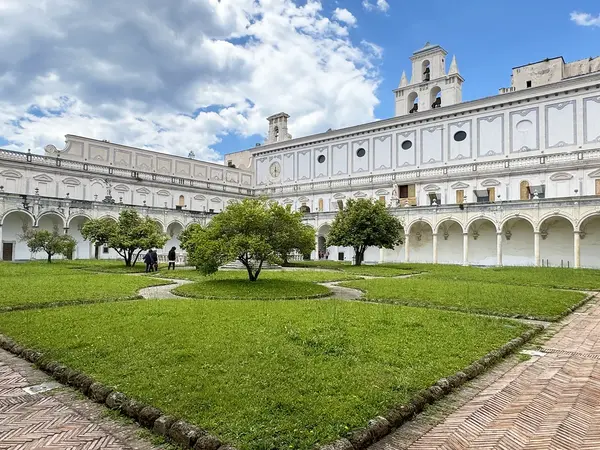
Certosa di San Martino
Baroque church, a cloister of marble skulls, Michele Cuciniello's 800-figure nativity and a belvedere over the whole city. The Certosa and Museo di San Martino is the Vomero's real treasure.
 inside
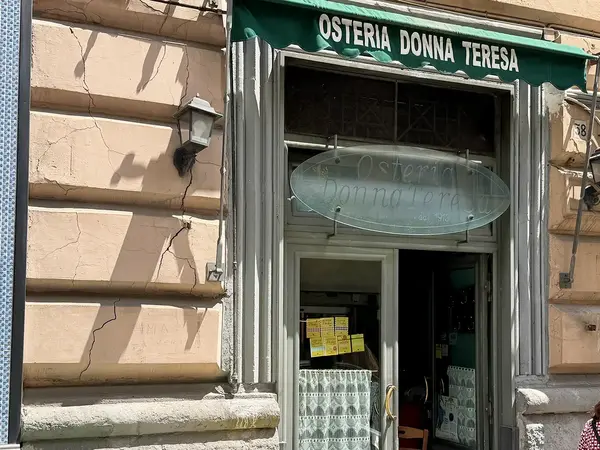
Osteria Donna Teresa
A century-old trattoria in Vomero where the menu is told at the table and lunch tastes like Sunday at a Neapolitan grandma’s.
inside
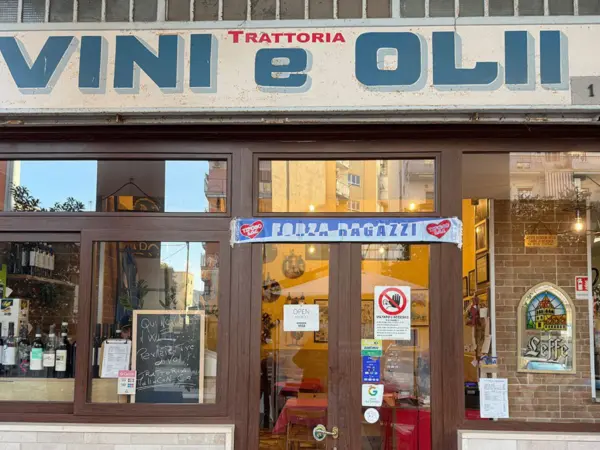

Trattoria Malinconico
This one is really for local lovers. People from Vomero (and not only) come here for their lunch break. Prices are very reasonable and the food is very genuine.
inside