



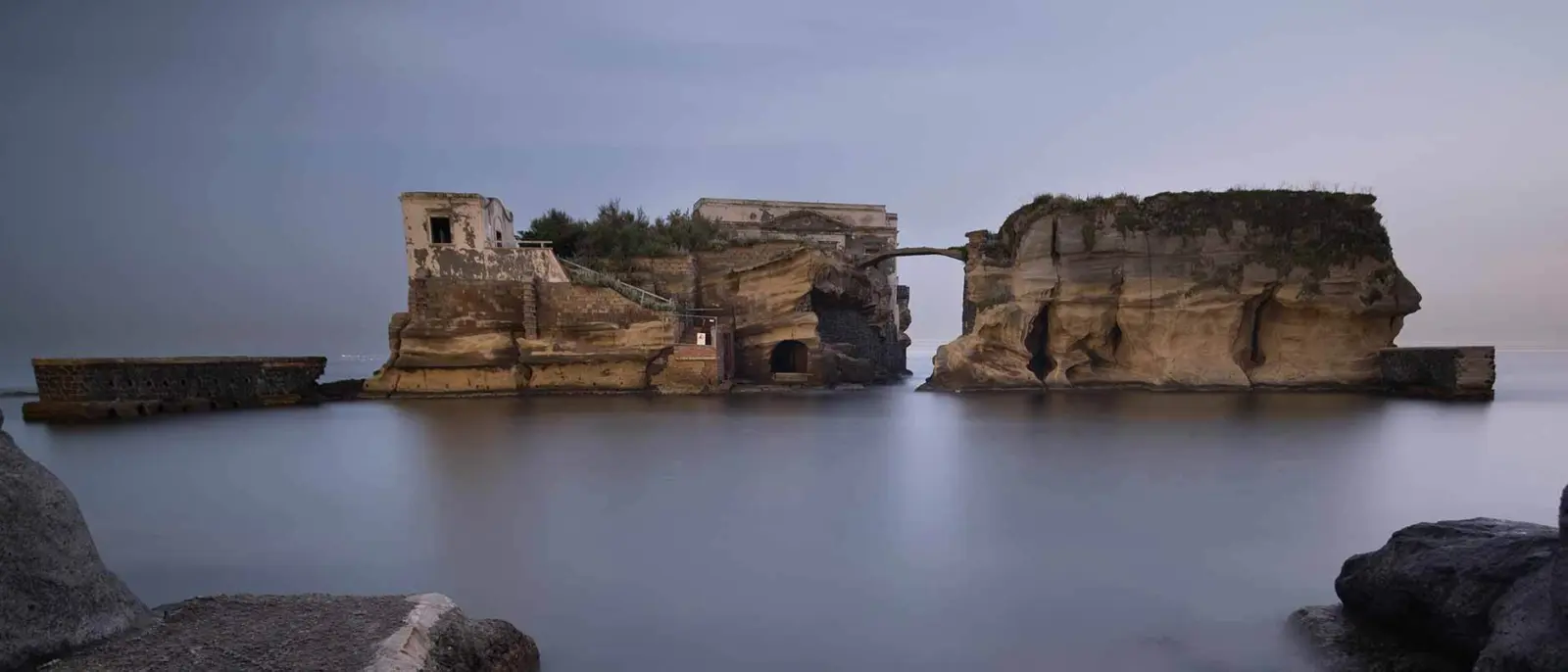
Gigi Upnea, CC BY-SA 4.0 via Wikimedia Commons
Parco Sommerso di Gaiola – An Underwater Park off Naples
A protected marine area where ancient Roman ruins sleep beneath the surface of the sea
Just off the Posillipo coast in Naples, a short swim from shore, are two tiny rocky islands connected by a narrow stone arch. They look almost too picturesque to be real, and if you're a Neapolitan, you know to admire them from a distance. The islands of Gaiola are cursed, or so the legend goes.
The story is hard to dismiss. In the 1920s, the island's Swiss owner Hans Braun was found dead, wrapped in a rug; his wife drowned in the sea shortly after. The villa passed to German Otto Grunback, who died of a heart attack while staying there. Maurice Sandoz, surrealist author and heir to the Swiss pharmaceutical dynasty, moved to the island in 1950 and ended up in a psychiatric clinic in Switzerland, where he died by suicide. Baron Karl Paul Langheim threw lavish parties there in the 1960s and was rapidly ruined. Gianni Agnelli bought the villa next, suffered a series of family tragedies, and sold up quickly. Paul Getty acquired it in 1968 — and in 1973 his grandson was kidnapped by the 'ndrangheta. The last private owner, Gianpasquale Grappone, saw his insurance company Lloyd Centauro collapse; on the day the villa went to auction, his wife died in a car accident. In the 1980s the island was acquired at a bankruptcy auction by the Campania regional government which, so far, seems to be holding up just fine.
But here's the thing: the real story of Gaiola is far more interesting than any curse.
A Roman villa, half submerged
What you see above the waterline is just part of the picture. The two islands and the surrounding seabed are what remains of the grand seaside villa of Publius Vedius Pollio, a wealthy Roman knight who built his retreat here in the 1st century BC. The villa was enormous, stretching from the clifftops down to the sea, with fish ponds, baths, nymphaea, and a private harbour. Over the centuries, volcanic activity (the same bradyseism that still makes the Campi Flegrei ground rise and fall today) caused large sections to sink beneath the surface, creating one of the most extraordinary underwater archaeological sites in the Mediterranean.
The park covers about 42 hectares and extends from the village of Marechiaro to the stunning bay of Trentaremi. Crystal-clear water, tuff cliffs, and the ruins of ancient Rome just a few metres below the surface. It really is as spectacular as it sounds.
How to visit
The park is managed by CSI Gaiola onlus, a nonprofit organisation of marine scientists and archaeologists who have been protecting and studying the area since 2004. They run everything from guided snorkelling tours to research projects on the local cormorant population, and they do it with true passion.
For visitors, the most popular options are:
Snorkelling — The signature experience, running in summer. Two itineraries to choose from: one focuses on Pollio's ancient fish ponds (around 9,000 square metres of submerged archaeology, with the original channels and chambers still visible); the other heads towards the old imperial harbour and the so-called "School of Virgil", a submerged nymphaeum the medieval imagination decided must have been where Virgil taught magic. Tours last about 2.5 hours, equipment is provided, and the cost is €25 per person. You don't need to be an experienced swimmer, but you do need to be able to swim. NOTE: access requires descending and re-ascending 150 steps.
Aquavision — The park's glass-bottom boat lets you take in both worlds at once: the dramatic tuff cliffs and green coastline above the surface, and the submerged Roman structures just metres below. The tour departs from the visitors' centre at Cala San Basilio, with a short audiovisual introduction to the protected area before boarding. The route runs from the village of Marechiaro to the bay of Trentaremi, lasting about 1.5 hours. Runs May to October.
Diving — For certified divers, the park offers two distinct experiences. The biological route explores the seabed of the Secca della Cavallara, with a maximum depth of 25 metres. The bio-archaeological route departs from the Secca della Gaiola and goes down to 16 metres, where Roman structures lie among the sea life.
Worth knowing
The snorkelling tours run in summer only, so plan accordingly. The Pausilypon Archaeological Park — the land side of the same Roman villa, equally extraordinary — is open year-round and makes for a natural companion visit. We have in fact a separate guide to it.
Whether or not you believe in curses, there's something genuinely atmospheric about floating above a Roman fish pond while the city of Naples hums in the distance. Some places just have that quality. Gaiola is one of them.
Contributor
Svevo
Founder & Chief Editor

Svevo is a Senior Digital Consultant and Full Stack Developer with over 20 years of experience. Born and raised in Italy, he spent more than a decade living and working in London before returning to Naples. A father of two and passionate advocate for his city, he created Ciao Napoli to share the places, stories and experiences that make Naples special from a genuinely local perspective. You can find out more about his work on his personal website.
Related places
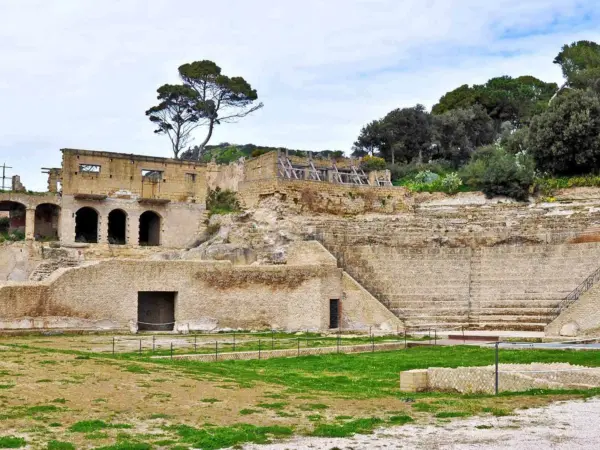
Pausilypon Archaeological Park
Enter through a Roman tunnel and emerge into the ruins of one of the ancient world's most spectacular private villas, set high above the sea on the Posillipo promontory with views down to the Gaiola islands.
 inside


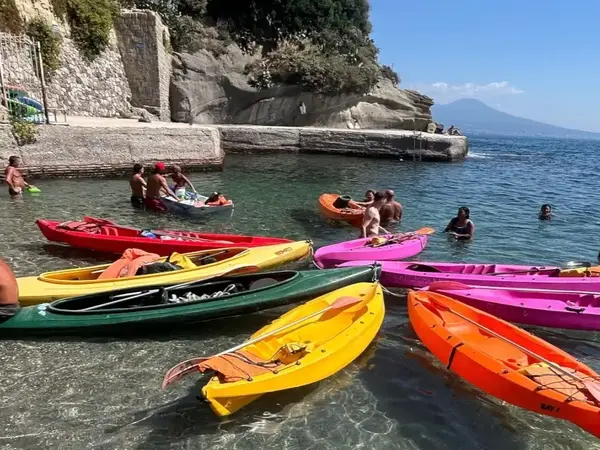
Kayak Napoli
Guided kayak tours and rentals along the Posillipo coast. That's Naples as you've never seen it.