



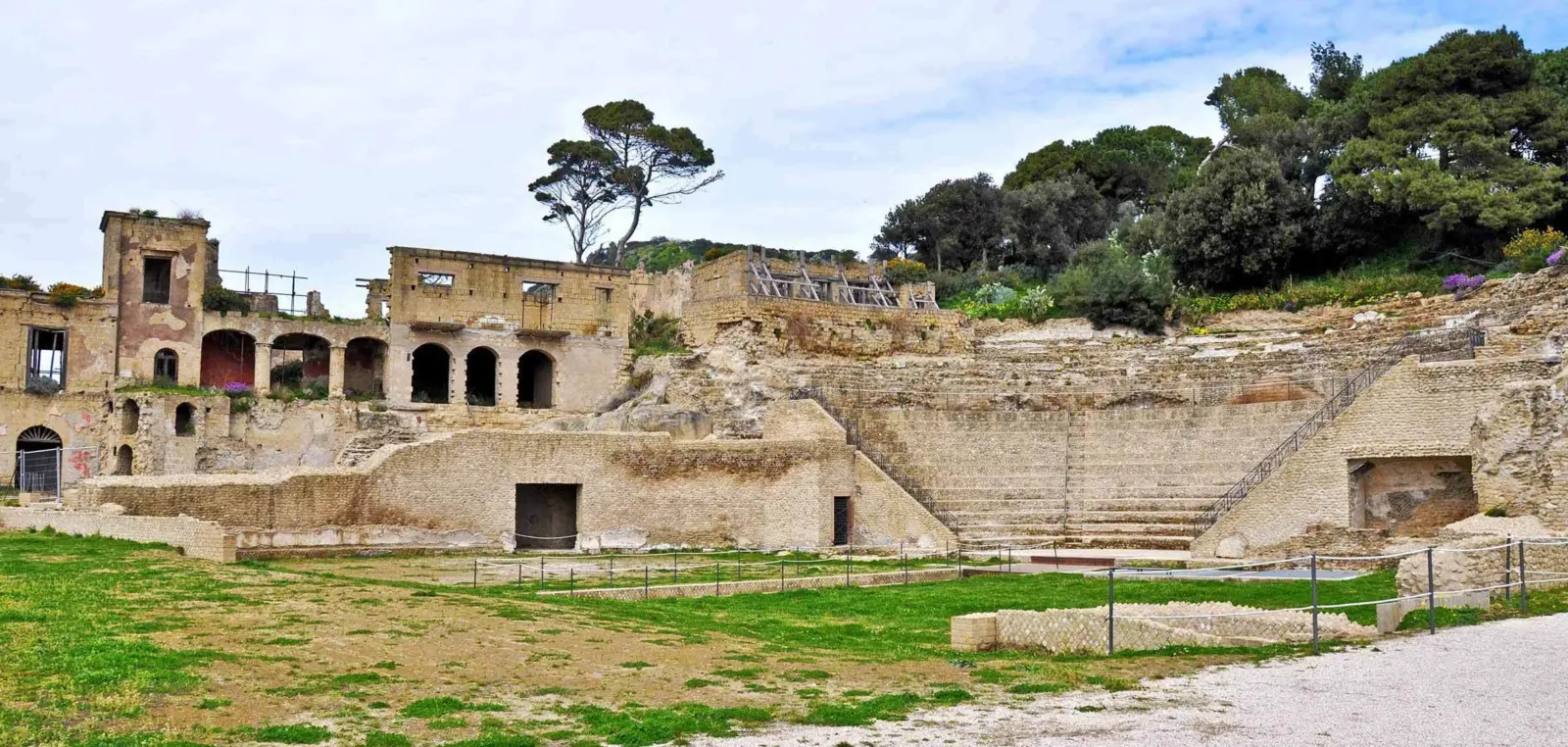
Armando Mancini, CC BY-SA 2.0, via Wikimedia Commons
Pausilypon Archaeological Park – Naples’ Roman Villa
The ruins of a Roman tycoon's seaside estate, hidden at the end of a 770-metre tunnel carved through the hill of Posillipo in Naples
Pausilypon is Greek, and it means "relief from suffering", which gives you a sense of how the Romans felt about this stretch of coast. On a warm afternoon, standing on a terrace with the Gulf of Naples below you and a light breeze coming off the water, it's hard to argue with them. Today this is an archaeological park, open to anyone willing to walk through a mountain to get there. In the 1st century BC, it was the private paradise of one of Rome's wealthiest and most controversial citizens who had made an extraordinary fortune as one of Augustus's key economic advisors during the reorganisation of the province of Asia between 27 and 25 BC.
Getting there is half the experience
You don't enter Pausilypon through a gate in a fence. You enter through a mountain. The Grotta di Seiano is a Roman tunnel, nearly 770 metres long, cut through the hill of Posillipo to connect the plain of Bagnoli with the valley of Gaiola. It was excavated in the 1st century BC, most likely on the orders of Pollio himself, to give direct access to the villa from the city side of the promontory — a private road, in effect, carved through solid tuff rock.
Walking through it is a remarkable experience before you've even reached the ruins. The tunnel is cool, dimly lit, and long enough that both ends disappear into darkness from the middle. Guides explain the engineering behind it, the techniques Roman workers used to cut through the volcanic rock, and the tunnel's turbulent subsequent history: it was rediscovered, lost, used, and forgotten across the centuries before being restored and reopened in the modern era. When you come out on the other side, the Gulf of Naples opens up in front of you all at once. The effect is theatrical.
The villa
What Publius Vedius Pollio built here was not simply a house. The complex extended from the clifftops all the way down to the sea and included a theatre, a smaller indoor concert hall (the odeion), grand reception rooms, baths, gardens, service quarters, a private harbour, and an elaborate system of fish ponds. Pausilypon is considered one of the earliest examples in the Roman world of a villa designed not just alongside nature but shaped by it, with the architecture following the contours of the landscape rather than overriding them. The result was a complex that felt simultaneously monumental and organic, its terraces and structures stepping down the cliffside toward the water.
The maritime structures (the harbour and the fish ponds) now lie submerged just offshore, forming part of the adjacent Gaiola Underwater Park. It's interesting to note that the same estate spans two settings, above and below the water, and today requires two separate visits to take in fully.
When Pollio died in 15 BC, the estate passed to Emperor Augustus and became an imperial residence. It was expanded and adapted across successive reigns to reflect its new role. What had been an extravagant private retreat became a place where emperors came to rest, receive guests, and look out over the sea. The theatre and odeion, which survive in the most recognisable form, were likely used for private performances and entertainments during these stays.
What you see today
The visible remains are concentrated in what was once the pars publica of the villa, the areas intended for entertainment and reception rather than private life. The theatre is the most substantial surviving structure, its semicircular form still legible in the landscape. The odeion sits nearby, smaller and more intimate. Fragments of the reception rooms and ceremonial spaces complete the picture. Throughout the site, the belvedere terraces offer views straight down over the Gaiola islets and the distinctive Scoglio di Virgilio — the same view, more or less, that Roman emperors would have enjoyed on summer evenings.
The park is managed jointly by the Campania regional government and CSI Gaiola onlus, the nonprofit organisation that also runs the underwater park. Guides bring genuine expertise to the site, covering not just the archaeology but the geology of the Posillipo promontory, the local vegetation, and the broader story of how this entire coastline became the Beverly Hills of the ancient Roman world.
How to visit
Entry is through the Grotta di Seiano on Discesa Coroglio. You have two options. A guided tour lasts around 90 minutes and is the recommended choice for a first visit — the context makes a real difference here. There's also a free accompanied entry without a guide, giving you around an hour to explore independently.
The park is open year-round, which makes it the natural companion to the Gaiola snorkelling tours that run in summer only. The two sites tell the same story from different angles, one above the waterline, one below. If you're doing one, it would be a genuine shame to miss the other.
People often ask us
What is the myth of Posillipo?
The name Posillipo comes from the Greek Pausilypon, meaning "relief from suffering" — the same word that gives the archaeological park its name. Behind it lies a legend told by Neapolitan writers including Matilde Serao in her collection Leggende Napoletane.
The story goes that a young man named Posillipo, kind-hearted and pure, fell hopelessly in love with Nisida, a beautiful but cold and cruel nymph who rejected him without pity. Destroyed by grief, he threw himself into the sea. Moved by his suffering, the gods transformed both figures into the landscape: Posillipo became the promontory, and Nisida the small island lying just offshore — close for eternity, but never able to meet.
It's the kind of story Naples does well: geography as heartbreak, beauty born from pain.
What are the best archaeological sites in Naples?
Naples sits on thousands of years of layered history, and much of it is still visible — or walkable, or in some cases, swimmable.
The Pausilypon Archaeological Park is one of the most dramatic: a Roman imperial villa entered through a 770-metre tunnel carved through the hill of Posillipo, with a theatre, an odeion, and fish ponds that now lie submerged in the adjacent Gaiola Underwater Park.
The Underground Naples (Sottosuolo di Napoli) is probably the largest archaeological site in the city, covering an estimated 60% of the area beneath the streets. Originally quarried by the Greeks for tuff stone, it became a Roman aqueduct and later a shelter during the Second World War — the graffiti left by those who hid there is still visible on the walls.
The Scavi di San Lorenzo Maggiore reveal the commercial heart of ancient Greek Neapolis beneath a medieval church on Piazza San Gaetano, with remains dating to the 4th century BC.
The Crypta Neapolitana, a 711-metre Roman tunnel in the Parco Vergiliano in Piedigrotta, is traditionally — and almost certainly incorrectly — attributed to Virgil, whose tomb stands near its eastern entrance.
Curated by
Svevo
Founder & Chief Editor

Svevo is a Senior Digital Consultant and Full Stack Developer with over 20 years of experience. Born and raised in Italy, he spent more than a decade living and working in London before returning to Naples. A father of two and passionate advocate for his city, he created Ciao Napoli to share the places, stories and experiences that make Naples special from a genuinely local perspective. You can find out more about his work on his personal website.
Related places
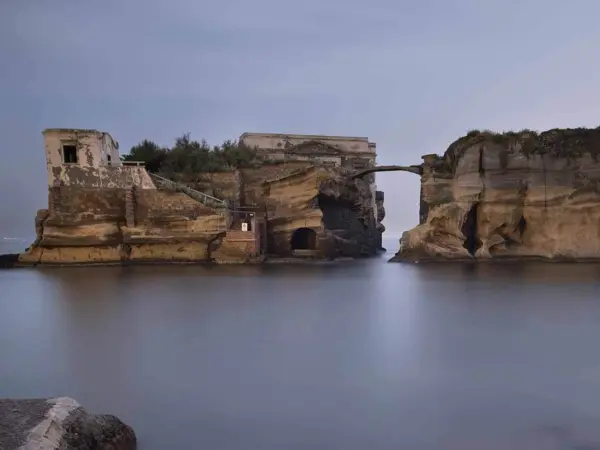
Gaiola Underwater Park
The Gaiola Underwater Park protects one of Naples' most extraordinary secrets: the submerged remains of a 1st-century Roman villa, sunk by centuries of volcanic activity.
 inside


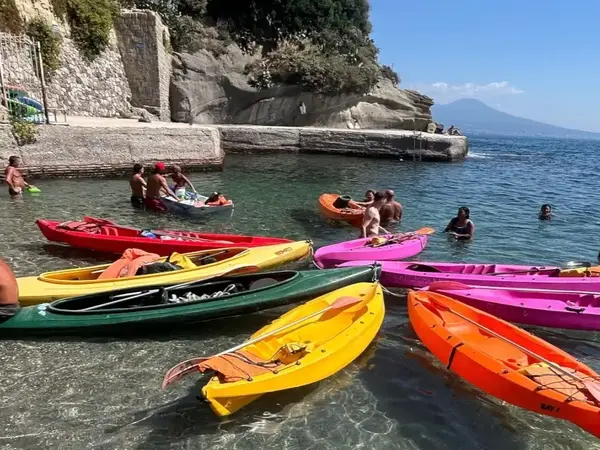
Kayak Napoli
Guided kayak tours and rentals along the Posillipo coast. That's Naples as you've never seen it.