



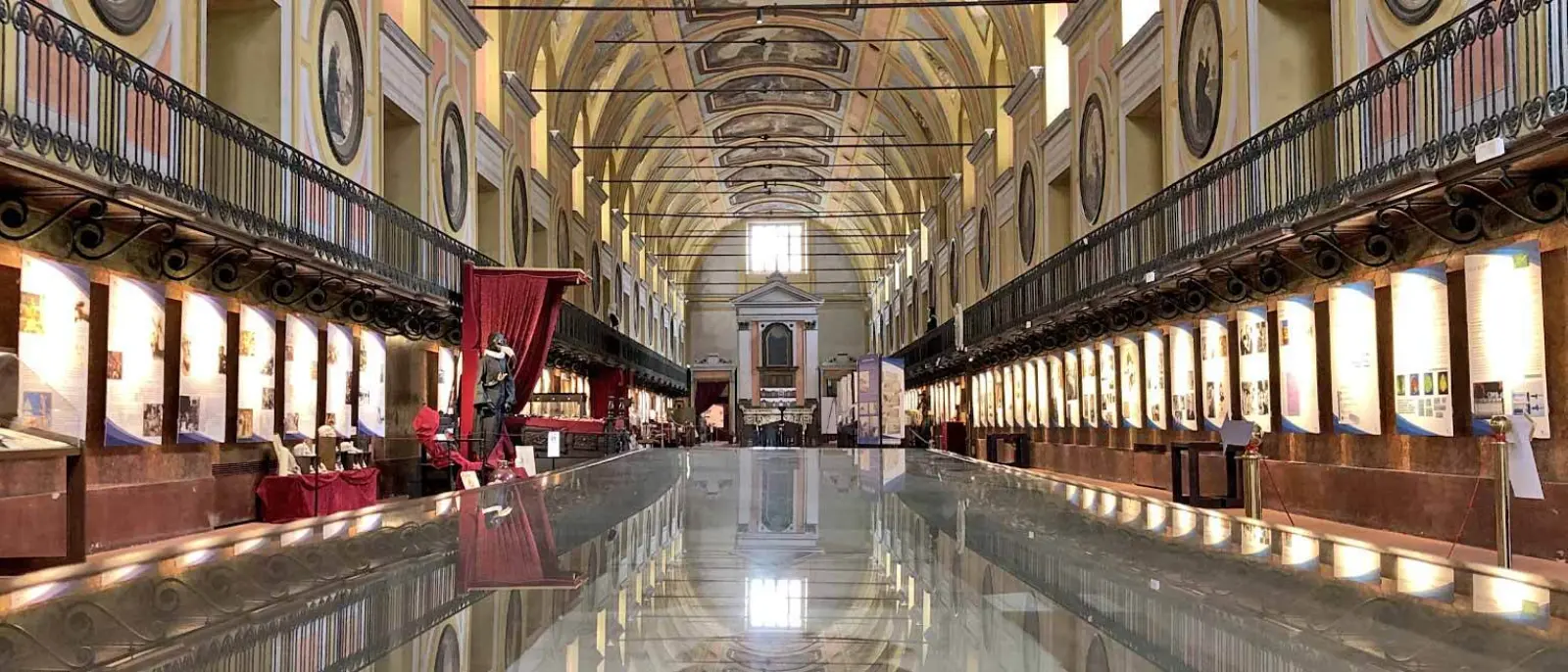
Museo delle Arti Sanitarie – Where Medicine Meets Wonder
A hospital that has been healing since 1522, a collection of over 12,000 medical artefacts, and a one-of-a-kind anatomical mannequin that exists nowhere else in the world — and yet most visitors to Naples walk straight past it
Inside the ex Ospedale di Santa Maria della Pace on Via dei Tribunali, the Museo delle Arti Sanitarie is one of those Naples discoveries that makes you wonder why it isn't on every travel itinerary. It probably isn't, because nobody has bothered to tell you about it properly. So here we are.
The museum is part of the wider complex of the Ospedale degli Incurabili — a hospital that has been treating patients continuously since 1522, founded by Maria Lorenza Longo on the hill of Caponapoli. The site was chosen for its healthy air, which at the time was believed to be the main vehicle of syphilis transmission. When science eventually identified the real cause of the disease, the names of several noble and clergy patients mysteriously vanished from the hospital's records overnight. Naples has always had a sense of humour about power.
A museum that grew out of passion
What you see today is largely the work of one man: Gennaro Rispoli, a surgeon who spent years patiently collecting antique instruments, anatomical prints and medical artefacts, driven by the desire to tell the story of a science that reached remarkable heights within these very walls. The collection now numbers over 12,000 items, tended by volunteers from the association Il Faro di Ippocrate — the Lighthouse of Hippocrates. There's something very Neapolitan about that: a functioning hospital, staffed by passionate volunteers, preserving five centuries of medical history in their spare time.
The exhibition rooms are named after luminaries of the Neapolitan School of Medicine — a school that trained some of the most significant medical minds in Europe, right here in Naples.
What you'll find inside
The undisputed star of the collection is an anatomical mannequin in papier-mâché dating from 1730–40. Fully articulated and disassemblable, it shows veins, spine and musculature reconstructed with startling precision — and it is the only one of its kind in the world.
Beyond this, the rooms contain rare surgical instruments of extraordinary craftsmanship, a portable 18th-century apothecary kit, one of Europe's earliest anaesthetic masks, and what is thought to be one of the first glass baby bottles. There are ivory and pewter clysters, ancient microscopes, anatomical wax models, and hundreds of anatomical prints charting the evolution of medical knowledge from humoral theory to modern clinical practice.
One of the more unsettling — and unforgettable — exhibits is the presepe degli Incurabili: a nativity scene of around a hundred figurines, each afflicted with a different disease. Made by contemporary master craftsmen, it works as a vivid epidemiological snapshot of 18th-century Naples. Macabre, brilliant, and completely unique.
The people behind the rooms
The halls are named after figures who deserve to be far better known outside Italy. Domenico Cotugno, the great anatomist who guided the hospital from the Enlightenment into the modern era. Domenico Cirillo, botanist and physician to the Neapolitan nobility, who was hanged at Piazza Mercato in 1799 for his role in the short-lived Parthenopean Republic — a reminder that in Naples, even the doctors had revolutionary hearts. And Giuseppe Moscati, the clinician and researcher who worked here in the early 20th century and was later canonised by Pope John Paul II, his reconstructed study still on display.
Planning your visit
Tours run at 10am, 11am and 12pm. Guided tours are available in English or French if requested in advance.
Related places
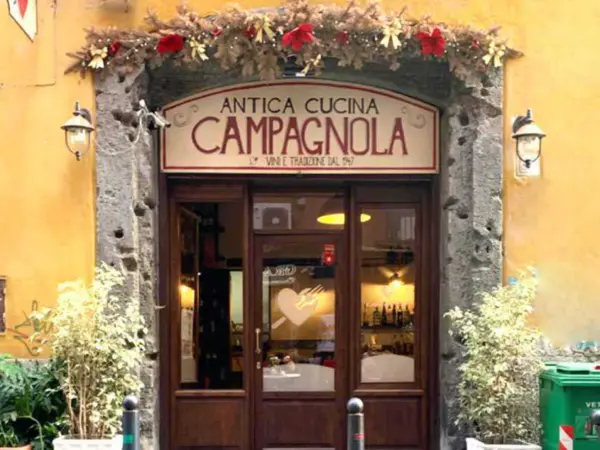
Trattoria La Campagnola
Classic Neapolitan trattoria on Via dei Tribunali. Everyday cooking, regulars at every table, and a menu that follows the market. The real deal, and increasingly rare in this part of the city.
 inside
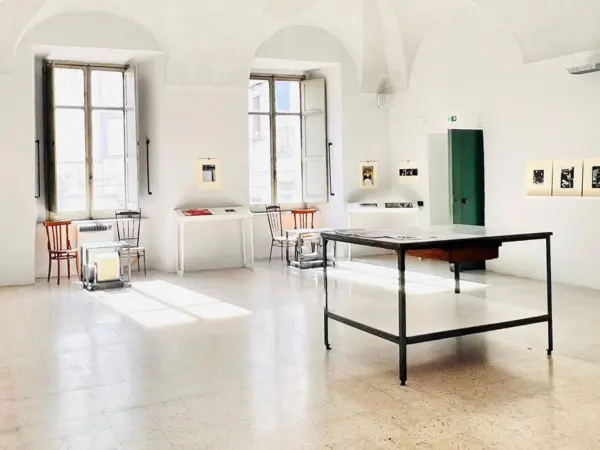

Magazzini Fotografici
An independent photography gallery in the historic centre of Naples, Magazzini Fotografici connects the city to the international visual culture scene through exhibitions, research projects and educational initiatives dedicated to contemporary photography.

Ospedale delle bambole (Dolls Hospital)
A unique artisan workshop and museum dedicated to preserving and restoring dolls, a hidden gem in the historic centre of Naples