



Vomero, Naples' most liveable neighbourhood
High above the city on a breezy hilltop, Vomero is almost a city within a city — self-contained, residential, and quietly proud of it. Locals who live downtown rarely make the trip up. Vomeresi, in turn, have everything they need without going down. The old Chiaia and Posillipo families still raise an eyebrow — too many shops, not enough pedigree — but Vomeresi don't lose sleep over it. They have the views, the wide tree-lined streets, and Oscar winner Paolo Sorrentino on their side.
(Read more)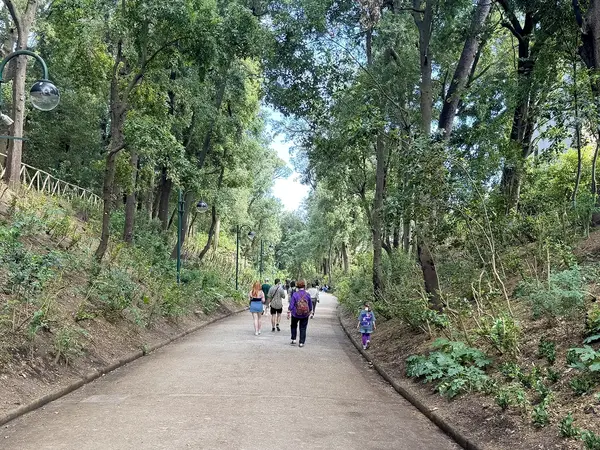
Villa Floridiana
Vomero's royal park, built by King Ferdinand for his second wife: shaded avenues, camellias, sunbathing turtles, a ceramics museum and a belvedere over the whole Gulf of Naples. Free entry to the park.
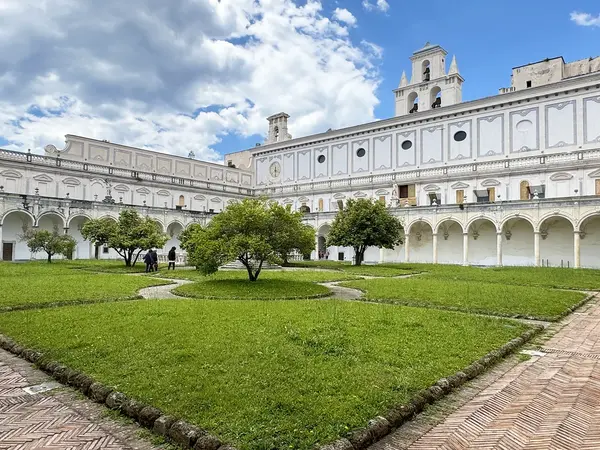
Certosa di San Martino
Baroque church, a cloister of marble skulls, Michele Cuciniello's 800-figure nativity and a belvedere over the whole city. The Certosa and Museo di San Martino is the Vomero's real treasure.
 inside
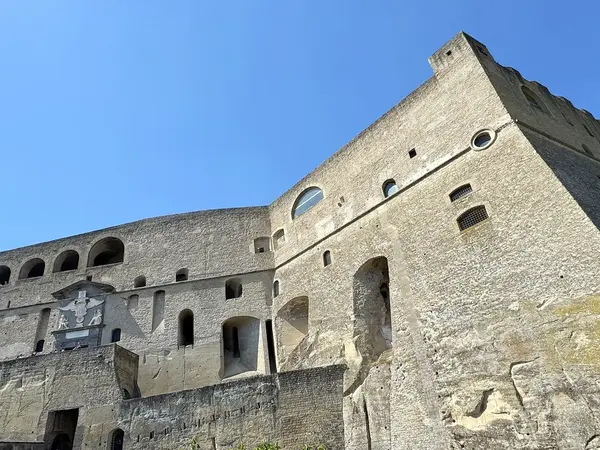
Castel Sant'Elmo
The star-shaped fortress crowning the Vomero hill. Come for the 360° view over the gulf and the historic centre, stay for the ramparts, the history and the Novecento art museum.
inside

Osteria Donna Teresa
A century-old trattoria in Vomero where the menu is told at the table and lunch tastes like Sunday at a Neapolitan grandma’s.
inside
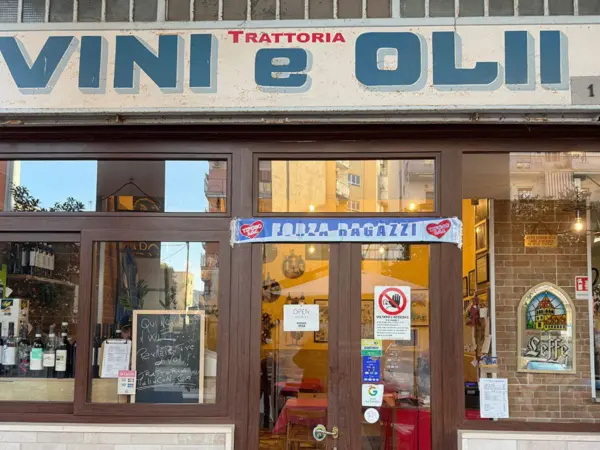

Trattoria Malinconico
This one is really for local lovers. People from Vomero (and not only) come here for their lunch break. Prices are very reasonable and the food is very genuine.
inside
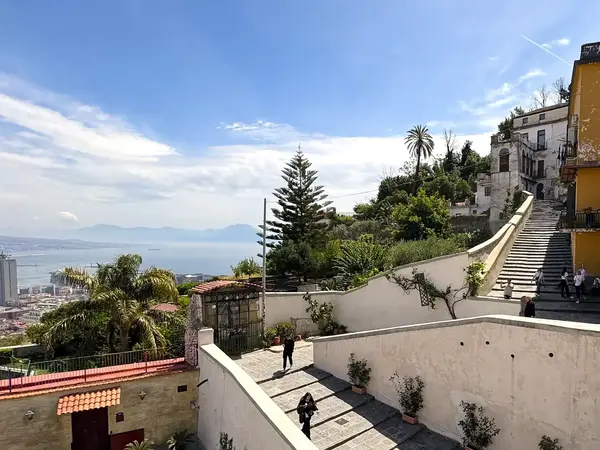
Pedamentina of San Martino
A long, historic descent from Vomero to the city below, where views, silence, and everyday Naples unfold step by step.
inside
A neighbourhood that invented itself late
Until the late 19th century, the Vomero hill was largely uninhabited. Its residents, such as they were, still spoke of going "down to Naples" as if the city were somewhere else entirely. The development that followed was deliberately upscale: Vomero was designed from the outset as a residential area for the upper-middle class, offering a cleaner, more refined, and tranquil alternative to the crowded city center. Its streets are lined with large villas and residential buildings, often in late Liberty style. Pulitzer Prize-winning novelist Jennifer Egan once called it the most European, perhaps even international, neighbourhood in Naples. Walking its wide, tree-lined streets, with their orderly cafés and well-kept facades, it's not hard to see why. Vomeresi know it too, and many wouldn't swap for Chiaia or Posillipo regardless of the postcode prestige.
Castel Sant'Elmo and the Certosa
The two monuments that define Vomero's skyline sit next to each other at the hill's highest point, and each deserve a proper visit. Castel Sant'Elmo is a star-shaped fortress with views across the whole bay to Vesuvius and the Sorrento peninsula; it also houses Novecento a Napoli, a museum of 20th-century Neapolitan art. Next door, the Certosa di San Martino is one of the best examples of Neapolitan Baroque: a Carthusian monastery whose church, cloisters, and ancillary buildings are largely 17th-century work. The terrace in front is one of the best viewpoints in Naples, and the Pedamentina staircase descending from here (414 steps through the hanging gardens of the Certosa) is one of the city's finest walks if your knees are up to it.
Villa Floridiana and Piazza Vanvitelli
Villa Floridiana, a gift from King Ferdinand IV for his morganatic wife the Duchess of Floridia, houses an important ceramics museum — but the real draw is its garden, which culminates in a long balcony with a wonderful view from Castel dell'Ovo to Posillipo. Entry to the park is free. From here, Piazza Vanvitelli is the neighbourhood's living room — the heart of Vomero, which comes alive especially in the evenings and on weekends. The streets fanning out from it — Via Scarlatti, Via Luca Giordano — are the main pedestrian arteries, tree-lined, good for a passeggiata, and lined with the kind of shops and bars that serve a genuinely local crowd.
Getting up here
Three funiculars connect Vomero to the city below — to Via Toledo, to Montesanto (closed for maintenance until mid-2027), and to Chiaia. Line 1 of the metro stops at Piazza Vanvitelli and Quattro Giornate.
People often ask us
How do I get to Vomero by public transport?
Vomero is well connected to the rest of Naples by metro, funicular railway and bus.
Metro Line 1 is one of the easiest options, with two stations in central Vomero: Quattro Giornate and Vanvitelli. The latter is particularly convenient for Villa Floridiana, Castel Sant'Elmo and the Certosa di San Martino.
The funicular railways are another excellent choice, connecting Vomero with the historic centre (Montesanto), the Via Toledo area (Funicolare Centrale) and Chiaia (Funicolare di Chiaia). Most of their routes run through tunnels, so don't expect panoramic views along the way.
Buses are a good alternative if you prefer travelling above ground, want to see the streets and neighbourhoods along the way, or simply don't enjoy tunnels. You'll also have better chances of keeping your mobile reception!
Please note (October 2026): The Montesanto funicular is temporarily closed for its mandatory 20-year overhaul. Reopening was initially expected in early 2027, although the date has not yet been confirmed. A replacement bus service is available.