



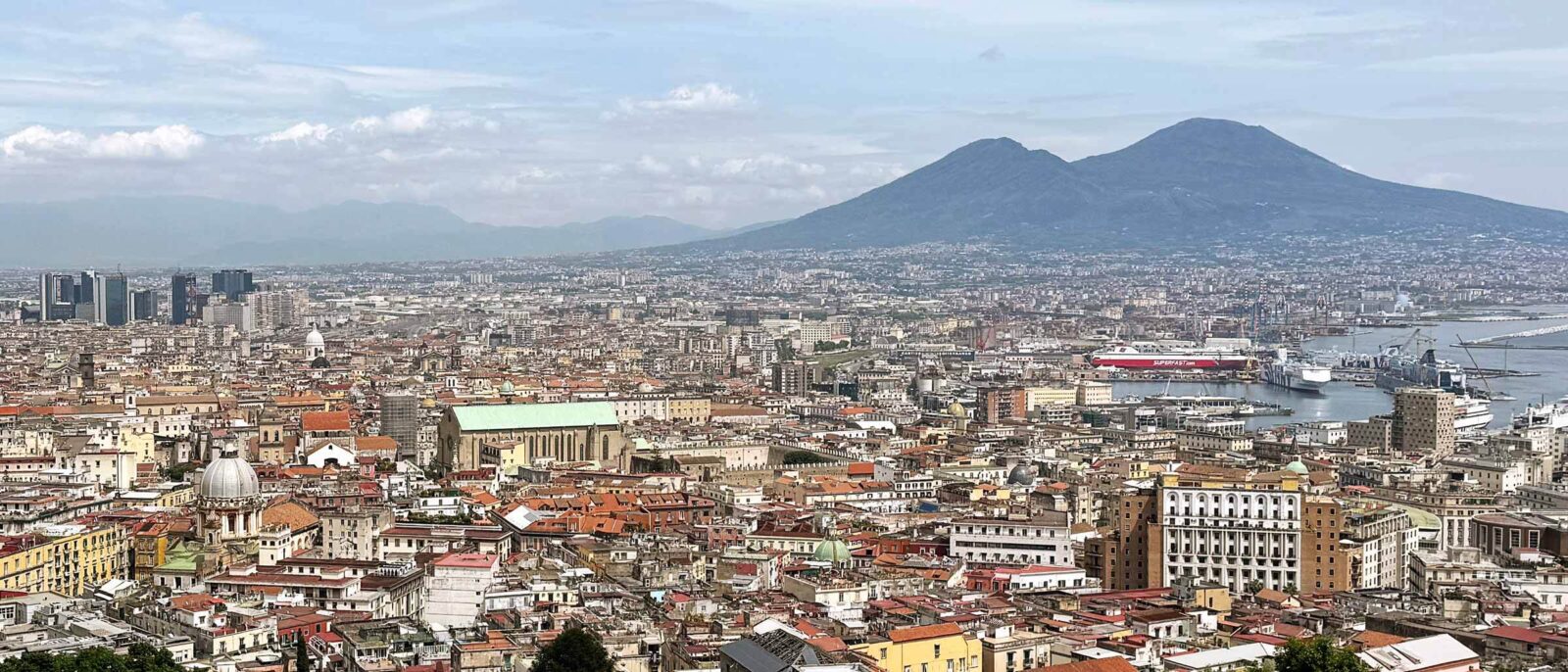
Is Naples Safe? What the Data Actually Says
Every year, Italy's most authoritative financial newspaper publishes a crime index based on official government data. Naples ranked 13th in 2025. Here's what that really means — and what it doesn't.
The most authoritative source on crime in Italy
If you've been googling "is Naples Italy safe" before your trip, you're not alone — it's one of the most searched questions about the city. And you deserve a better answer than vague reassurances or recycled clichés.
So let's start with data. Every year, Il Sole 24 Ore — Italy's equivalent of the Financial Times, and arguably the most authoritative newspaper in the country — publishes its Crime Index through its data journalism lab, Lab24. The index ranks all Italian provinces by total crimes reported per 100,000 inhabitants. The methodology is transparent: the underlying data comes directly from the Ministry of the Interior, Italy's national authority responsible for public security. It doesn't get more official than that.
The most recent index covers the 2024/2025 period. Naples ranks 13th. Not first. Not second. Thirteenth.
Let that sink in for a moment. In a country of 107 provinces, Naples comes in at number 13 overall. Above it: Milan (1st), Florence (2nd), Rome (3rd), Rimini, Bologna, Torino, Venezia, Genova, Trieste, and several others. That's not a comforting spin, it's just what the numbers say.
Now, you might be thinking: fine, but surely Naples must top the list for pickpocketing, bag snatching, that kind of thing? The crimes visitors actually worry about? The data doesn't support that either. In the breakdown by category, Naples ranks 4th for theft with force (bag snatching), 19th for theft with dexterity (pickpocketing), and 4th for street robbery. Significant, yes — but not the outlier the reputation would suggest, and not different in kind from what you'd find in any major European city.
Where Naples does rank first is in contraband and extortion. Extortion in particular is worth understanding correctly: it is overwhelmingly a crime of organised crime against businesses — a tool of economic coercion directed at commercial operators, not at tourists wandering through the historic centre. It is definitely a problem for the city and its economy, but it is not a threat that affects visitors.
A city that has genuinely changed
The gap between Naples' reputation and its reality has a history. In the 1980s and much of the 1990s, parts of the city were genuinely dangerous in ways that affected daily life — and those years left a mark on how Naples is perceived abroad that has been slow to fade.
What changed? Better city governance played a real role. Antonio Bassolino's tenure as mayor from the mid-1990s onward is widely credited with beginning a serious urban and cultural renewal. International tourism, which returned in force over the following decades, brought economic investment and visibility that continued the transformation. The Naples of that era and the Naples of today are meaningfully different places.
Use your judgement — as you would anywhere
None of this means Naples requires zero common sense. Like any large city — London, Paris, Barcelona, New York — it has areas that are more polished and areas that are rougher around the edges. Staying in the centre, in Chiaia, in Posillipo, or in Vomero puts you in well-frequented, well-connected neighbourhoods. Venturing into outlying peripheral areas without local knowledge is less advisable, as it would be in most major cities in the world.
Watch your phone and wallet in crowded spots, as you would on the Barcelona Ramblas or the Rome Metro. Don't leave bags unattended. Basic travel awareness, nothing more.
One last thing worth remembering
Naples is older than Rome. It was the capital of a kingdom — the Kingdom of the Two Sicilies — that for centuries made it one of the most influential cities in Europe. It has a UNESCO-listed historic centre, one of the world's great culinary traditions, a coastline of extraordinary beauty, and a warmth toward visitors that is entirely genuine.
The city has carried an unfair reputation for too long. The numbers, for once, are on its side.