



Naples in One Day Itinerary
A calm visit to Naples, through the historic centre, a seafood lunch, and an afternoon in Posillipo. Naples is best understood slowly.
Most one day itineraries in Naples try to cover everything. This one doesn't. Instead, it offers something perhaps more useful: a mental map of the city — old Naples, the sea, the views, the rhythm — built over the course of one slow day. By the time you sit down for an aperitivo at sunset, you'll understand why people who come here for a weekend keep coming back for decades.
Morning: into the historic centre
Start in the Centro Storico, which is the only sensible place to begin. This is one of the oldest continuously inhabited urban grids in the world — laid out by Greek colonists in the 5th century BC, still largely intact, still navigating the same logic of long straight streets cutting across narrower ones. UNESCO designated it a World Heritage Site in 1995, but the neighbourhood doesn't carry itself that way. It's too busy being itself.
Walk Spaccanapoli, the long, perfectly straight street that cuts the old city in half, and take your time. The churches open early. Some of them are incredible. Step inside when one catches your attention; no need to tick them all off. What you're doing here is absorbing atmosphere as much as sightseeing: the noise, the laundry above the street, the shrines tucked into corners, the smell of coffee pulling you towards a bar.
Have that coffee standing at the counter, the way Neapolitans do. It costs almost nothing and it's one of the small rituals that makes you feel, even on your first day, like you're already part of something.
Lunch: a pause between two worlds
By midday, make your way towards the seafront. The best way to get there is also one of the nicest walks in Naples: exit the old town onto Via Toledo, follow it all the way down to Piazza Trieste e Trento, then cross Piazza del Plebiscito, one of the largest squares in southern Italy. From there, take the lungomare until you reach Borgo Marinari. The walk from the historic centre to the water is itself a transition. The density of the old city gradually easing as you approach the sea. This is a good moment to stop for lunch before the afternoon takes you somewhere entirely different.
Borgo Marinari, the tiny fishermen's island just below Castel dell'Ovo, sits at the meeting point between the old city behind you and the sea ahead. It's a natural place for a seafood lunch, and where you choose to eat can help set the tone for the kind of day you want.
For something unpretentious and genuinely local, Trattoria da Patrizia offers an honest seafood menu at very reasonable prices. For a more considered experience, Officina del Mare take a more refined approach to the same Neapolitan seafood tradition, with a kitchen that treats the ingredients seriously and a setting to match.
Either way, don't rush. Take the carafe of house wine. Watch the boats. Naples at lunchtime has a particular quality of suspended time worth savouring.
Afternoon: Posillipo
After lunch, pick up a cab or a bus from Piazza della Vittoria towards Posillipo — or, if you have the legs for it, the lungomare walk along the coast is a perfectly fine way to get there. If the morning was about old Naples, dense, layered, and loud, the afternoon is about something entirely different: the Naples of clifftop villas, clear water, and views that the ancient Romans found restorative enough to name a whole promontory after. Pausilypon, they called it. Relief from pain.
The ride up Via Posillipo is an experience in itself, the road winding above the gulf with the city spreading out below. Once up there, the atmosphere changes completely. The streets are quieter, the air is different, the scale shifts. This is where wealthy Neapolitans have always come to breathe, and it shows.
Walk towards Capo Posillipo, or find a spot with a view of the gulf and simply stay there for a while. At the far end of Via Posillipo, the fishing hamlet of Marechiaro has survived largely intact — a handful of steps, arches, and boats, where the city suddenly feels very far away.
Evening: aperitivo with a view
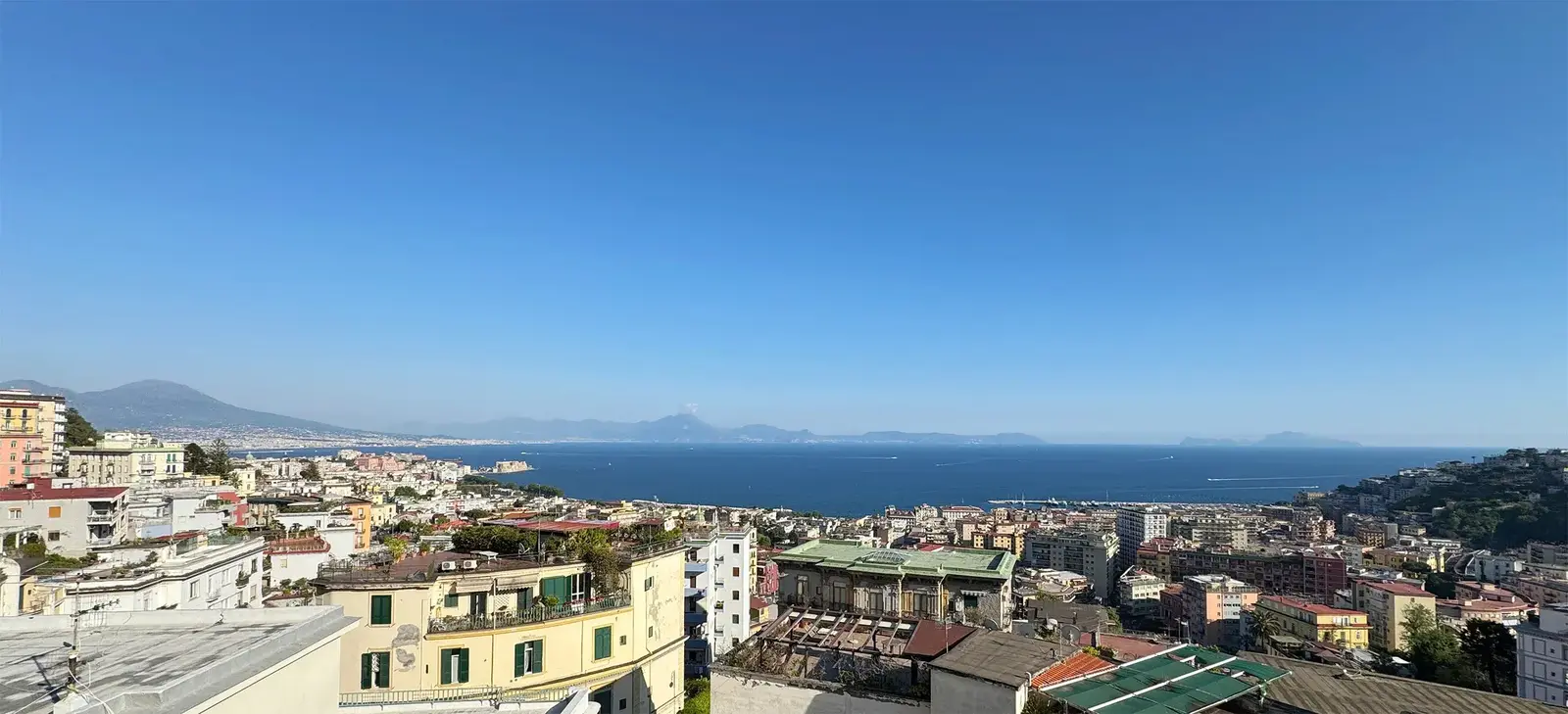
When the light drops, Naples shows off. The gulf catches the late sun, Vesuvius turns the colour of old stone, and the city below starts its transformation from daytime bustle into something warmer and more theatrical. This is the moment for an aperitivo.
Around Parco Virgiliano or along Via Petrarca there are several bars with terraces and views. Find one that feels right and settle in. In Naples this doesn't mean a Milan-style buffet, it means a good glass of wine or an Aperol Spritz, something small to eat alongside it, and simply watching the evening arrive. This is, by any measure, an excellent way to end a first day.
You haven't seen everything. You were never going to. But you've seen enough to understand the shape of the city: the ancient streets at its heart, the sea at its edge, and the particular light that falls over all of it at the end of the afternoon. That's a good foundation for everything that follows.
Related articles

Bookstores in Naples: A Book Lover's Guide
Two walks through the bookstores of Naples, from the dusty stalls of Port’Alba to the community shops of Vomero, with plenty of books in English along the way.